News & Media
Featured
Renewable energy storage gives a new lease of life to end-of-lifecycle mine shafts
Saturday, February 8, 2020
The new power source, dubbed “gravity energy” is being developed by Gravitricity, and mimics hydropower projects which have played a key role in helping to balance the electricity grid.
Gravitricity’s “virtual battery” design is created by hoisting and dropping 12,000-tonne weights – more than the weight of the Eiffel Tower – down disused mine shafts, according to Imperial College London.
This system effectively stores energy by using electric winches to hoist the weights to the top of the shaft when there is plenty of renewable energy available, then dropping the weights hundreds of metres down vertical shafts to generate electricity when needed.
A full-scale project would drop 24 weights totalling 12,000 tonnes to a depth of 800 metres to produce enough electricity to power 63,000 homes for more than an hour. By controlling the winches Gravitricity said it could extend this period by allowing the weights to fall at a slower rate and release electricity over a longer period.
Ideally suited to network-constrained users and operators, distribution networks and major power users, the technology operates in the 1MW to 20 MW power range and enables existing grid infrastructure to go further in a renewable energy world. Electrical power is either absorbed or generated by raising or lowering the weight. The weight is guided by a system of tensioned guide wires to prevent it from swinging and damaging the shaft.
The system was developed by Gravitricity’s founder, Peter Fraenkel, who also invented the world’s first full-scale tidal energy turbines. The tidal energy design was subsequently bought by the German industrial firm Siemens.
The company is currently in discussion with mine owners in the UK, South Africa, Poland, and the Czech Republic, where mine shafts can be more than 2,000 metres deep.
Charlie Blair, Gravitricity’s managing director, said: “The beauty of this is that this can be done multiple times a day for many years, without any loss of performance. This makes it very competitive against other forms of energy storage – including lithium-ion batteries.”
Oliver Schmidt, the lead author of Imperial’s report, said Gravitricity’s model is the most price competitive energy storage option because it has a relatively low upfront cost and a potential lifespan of more than 25 years.
The report found that electricity released by a typical 10MW lithium-ion battery project would cost $367 per megawatt-hour over its lifetime compared with a cost of $171/MWh for electricity from a Gravitricity project.
Schmidt said: “I don’t expect Gravitricity to displace all lithium batteries on grids, but it certainly looks like a compelling proposition.”
Images are courtesy of Gravitricity.
Join Us at Mining Indaba 2027
Mining Indaba 2027 is where African and global mining leaders come together to connect and shape the future. Exhibit, sponsor, or register today —don’t miss out!
Related articles

Articles
Thursday, November 5, 2026
Africa’s mineral sovereignty paradox
As African governments tighten their grip on natural resources, a critical gap is emerging between policy and fiscal reality.

Articles
Thursday, November 5, 2026
Water may be the energy transition’s most overlooked constraint
Mining and metals production depends on water. It is essential for extraction, mineral processing, dust suppression, cooling, transport and site operations.
Articles
Wednesday, November 4, 2026
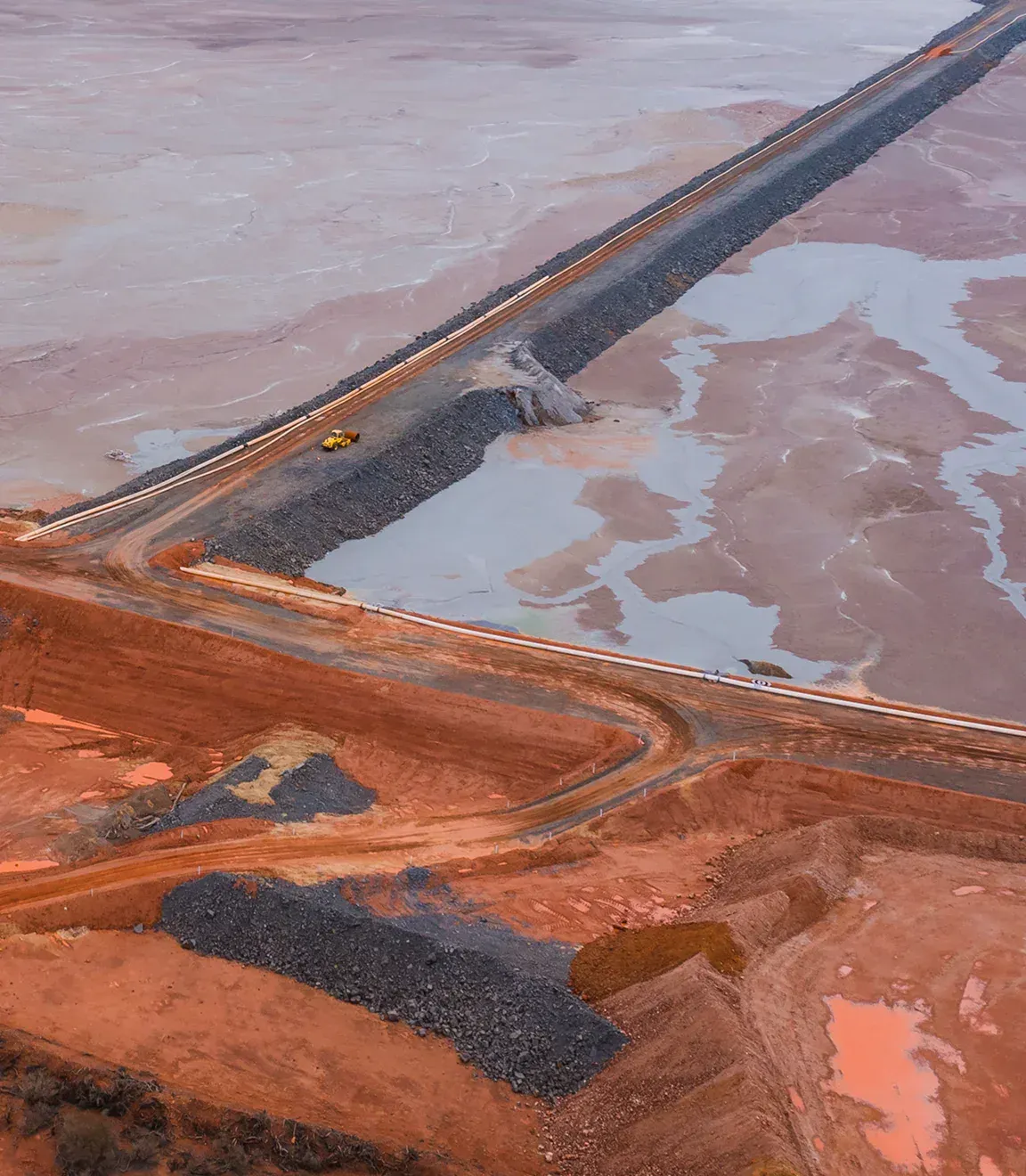
Tailings safety: A turning point built on partnership
In 2019 I flew over Brumadinho in Brazil and saw the devastation caused by the tailings dam failure. I had already spent years working alongside Brazilian authorities after the Fundão tailings failure, which killed 19 people.